

In a traditional inspection workflow, a machined part is removed from the production line, transported to a QC lab, queued for an available CMM, measured, and then sent back to production with feedback. This process may work for final inspection, but it can create bottlenecks when teams need quick confirmation during setup, first article inspection, or in-process checks.
The first challenge is waiting time. If the lab has only one CMM, multiple departments may be competing for the same machine, and a part that took only minutes to machine may sit for hours before it can be measured. The second challenge is delayed feedback. If results come back several hours later, or even the next day, the machine may continue producing nonconforming parts in the meantime. The third challenge is part handling. Large welded structures, heavy castings, fixtures, frames, and assemblies may require a crane or may not fit on a bridge CMM at all.
For these reasons, automotive, aerospace, heavy equipment, and metal fabrication teams are moving more first article inspection and in-process measurement closer to the point of production. Kloeckner Metals, for example, uses the KEYENCE WM-6000 as a portable CMM system for shop floor inspection, allowing teams to measure large or complex parts without interrupting production flow or moving the workpiece to a fixed CMM.
Moving inspection out of the metrology lab is not as simple as placing a conventional CMM next to a machining center. A QC lab is controlled for temperature, vibration, cleanliness, and space. A shop floor is not. Temperature changes caused by seasonal shifts, air conditioning, machine heat, and warm workpieces can affect both the CMM scale and the part being measured.
Shop-floor-ready systems are designed to manage these risks in different ways. KEYENCE handheld CMMs are built for on-site measurement rather than dedicated lab installation. The XM Series uses temperature compensation and an adaptable camera system, while the WM-6000 Series supports measurement across +10–35°C. This allows many inspections to be performed where the workpiece is located, without waiting for a climate-controlled room.
Vibration is another concern. Presses, machining centers, forklifts, and nearby equipment can introduce floor vibration, especially for CMMs that depend on precision mechanical motion. KEYENCE XM and WM systems do not use the air-bearing bridge structure common in stationary CMMs, which makes them easier to deploy around production equipment.
Dust, chips, oil, and space constraints also matter. Particles on probes or moving mechanisms can reduce measurement reliability. A handheld CMM has fewer exposed moving structures, and the WM Series can be stored in a suitcase-style case, reducing the need for dedicated installation space.
There is no single best shop floor CMM for every factory. The right choice depends on the size of the part, required tolerance, inspection frequency, operator skill level, and how close the measurement process needs to be to production.
A shop floor bridge CMM, such as the ZEISS DuraMax, brings the familiar structure of a stationary CMM closer to the production area. These systems are typically more rugged than lab-only bridge CMMs and may include temperature compensation or protective design features. They are a good fit when repeatable inspection is needed near a production cell, but they still require dedicated installation space.
Portable arm CMMs, such as FARO Arm or Hexagon ROMER-style systems, can be positioned near large parts and used to measure multiple sides of a workpiece. They are useful when the operator needs reach and flexibility, but they still require careful setup, proper operator technique, and a stable mounting point.
Handheld wireless CMMs, including the KEYENCE XM Series and WM Series, are designed for easier deployment. The XM Series is suited for small to mid-size workpieces, with a maximum measurement range of 2 m. The WM Series supports large parts and assemblies up to 25 m. The WM Series also combines contact probing for 3D and GD&T measurement with laser scanning for shape and form inspection.
Laser trackers are powerful tools for very large structures and long-distance measurement, but they are typically more expensive and require specialized metrology knowledge. In practice, the difference is not only accuracy. Setup time and operator requirements often determine whether a system is practical for everyday shop floor use.
| CMM Type | Selection Factors |
|---|---|
| Shop Floor Bridge CMM ZEISS DuraMax |
Environmental Tolerance: Temperature compensated Setup Time: Fixed installation Accuracy: ±2–4 µm Operator Skill Needed: Moderate Price Range: $60K–$150K |
| Portable Arm CMM FARO Arm |
Environmental Tolerance: Moderate Setup Time: 10–15 min Accuracy: ±20–50 µm Operator Skill Needed: Moderate to high Price Range: $50K–$150K |
| Handheld Wireless CMM KEYENCE XM / WM |
Environmental Tolerance: +10–35°C; no climate control required for many shop floor checks Setup Time: About 5 min Accuracy: ±7–28 µm, depending on the model Operator Skill Needed: Low; beginner-friendly operation Price Range: Contact manufacturer |
| Laser Tracker |
Environmental Tolerance: Moderate Setup Time: 15–30 min Accuracy: ±15 µm + 6 µm/m Operator Skill Needed: High Price Range: $100K–$250K+ |
When selecting a shop floor CMM, catalog accuracy is only one part of the decision. First, confirm how the system handles temperature variation. Some systems use real-time compensation, while others require manual input or a controlled inspection area. Second, check setup time. If inspection needs to happen during short machine stops, a system that can be ready in about five minutes is more likely to be used consistently than one that requires a long setup routine.
Third, consider operator skill. A system that requires a dedicated metrologist may deliver strong accuracy, but it may not eliminate the production bottleneck if only one person can operate it. Handheld CMMs such as the KEYENCE XM Series and WM Series are designed to lower that barrier with guided operation, handheld probing, and CAD comparison software.
Software usability is also critical. Shop floor inspection should help operators make quick decisions: pass, fail, adjust, or continue. CAD comparison, automatic reporting, visual guidance, and simple workflows can be just as important as the hardware itself.
Finally, consider ROI. For example, 30 minutes of transport and queuing, 10 times per day, equals 5 hours of lost production time. Over 250 working days at $50 per hour, eliminating that step can save $62,500 per year.
The future of quality inspection is not about abandoning the metrology lab. It is about using the lab where it adds the most value, while moving routine, urgent, and production-critical checks closer to the workpiece. For first article inspection and in-process inspection, immediate measurement can prevent a small setup issue from becoming a batch-wide quality problem.
Shop floor bridge CMMs, portable arms, handheld wireless CMMs, and laser trackers all support this shift. Bridge systems offer stable, repeatable inspection near production. Portable arms provide reach and flexibility. Laser trackers support large-scale measurement. Handheld systems such as the KEYENCE XM Series and WM Series stand out when teams need fast setup, easy operation, and point-of-production inspection without building a dedicated metrology room.
For small and mid-size workpieces, the XM Series brings CMM-style 3D and GD&T measurement to benches, machines, and production cells. For large parts, structures, and assemblies, the WM Series extends that capability across a wider area, combining contact probing and laser scanning in one system.
As manufacturers work to shorten feedback loops, the strongest strategy is to measure parts where production decisions are made. For factories that do not have a climate-controlled inspection room, handheld shop floor CMMs can make high-precision measurement more practical on the production floor.
Learn more about Portable CMMs
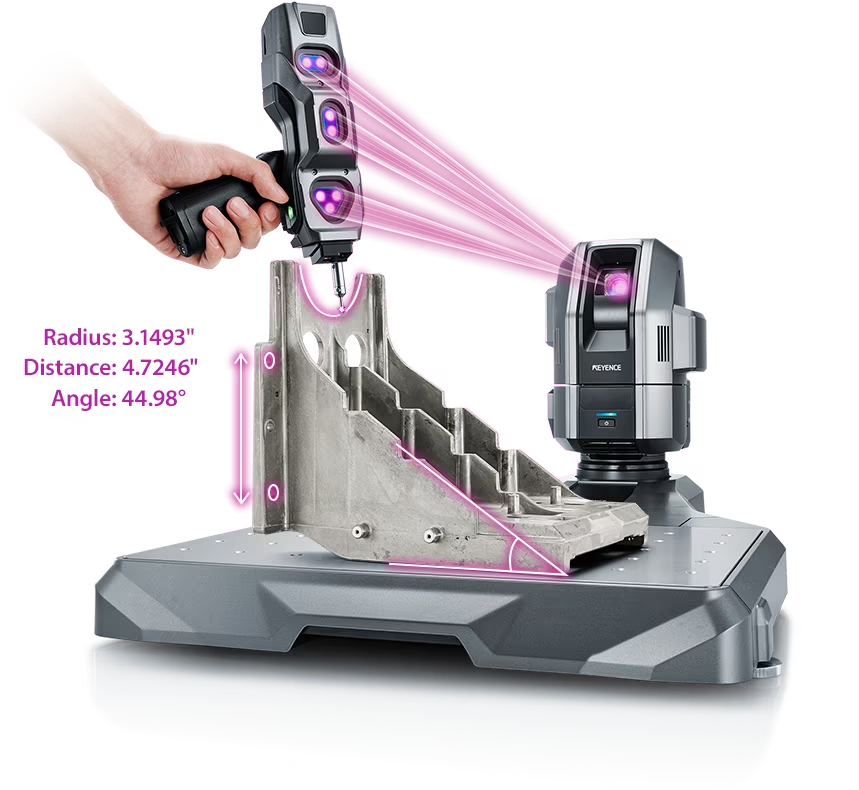
Source: KEYENCE Website(https://www.keyence.com/products/measure-sys/cmm/xm/index_pr.jsp)
This CMM has a caliper-like feel, enabling even beginners to perform high-precision measurements. It can be carried without the need for temperature control, allowing for immediate measurements at any desired location and time. As it doesn't require a large installation space, it's a CMM with a low entry barrier.
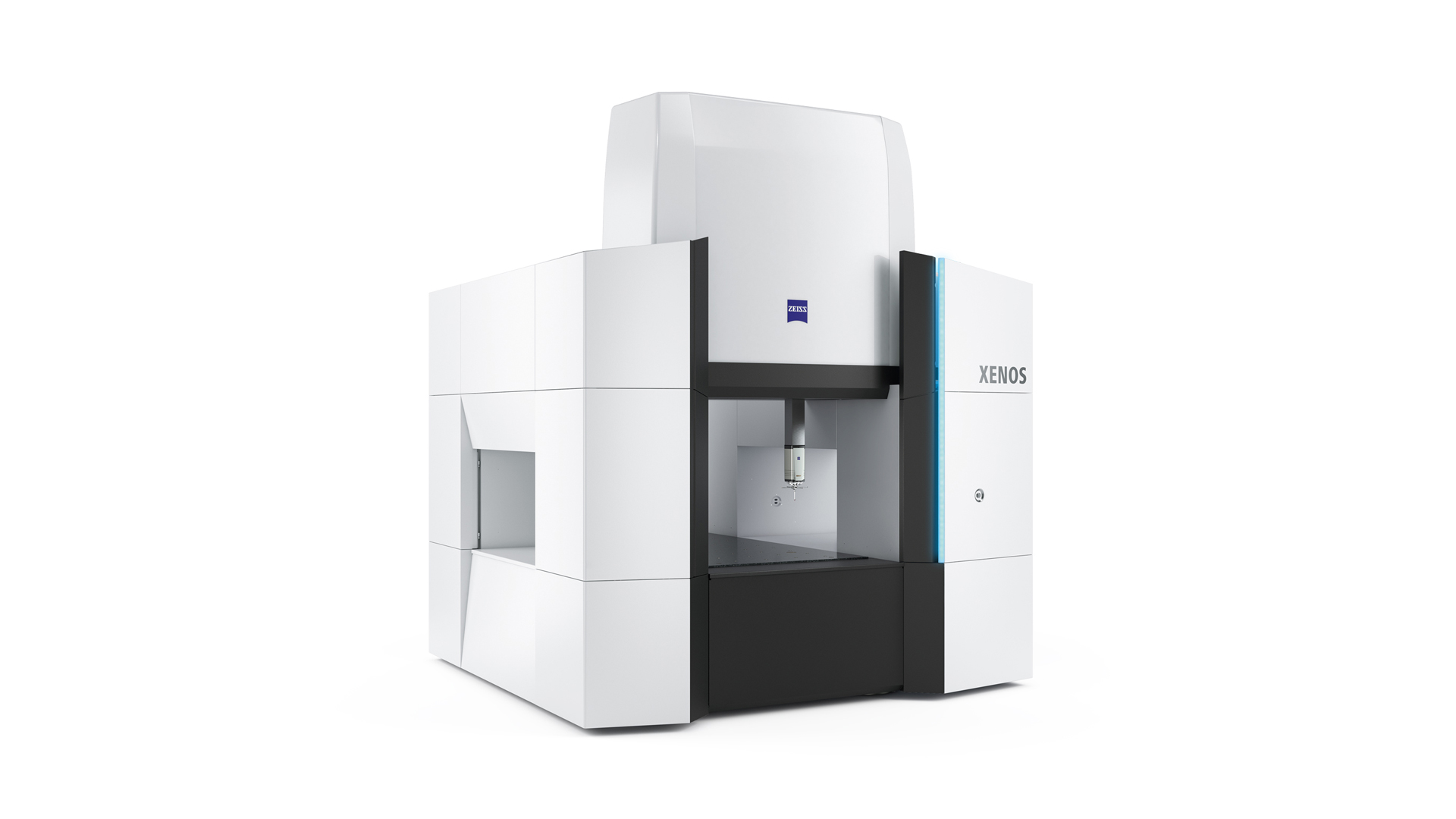
Source: Carl Zeiss Website(https://www.zeiss.com/metrology/products/systems/cmm.html)
Utilizing linear drive on all axes, this CMM boasts high precision with a maximum permissible length measurement error of 0.3+L/1000μm, repeatability of ±0.2μm, and resolution of 0.001μm. The reduced occurrence of errors allows for a decrease in the need for remeasurement.
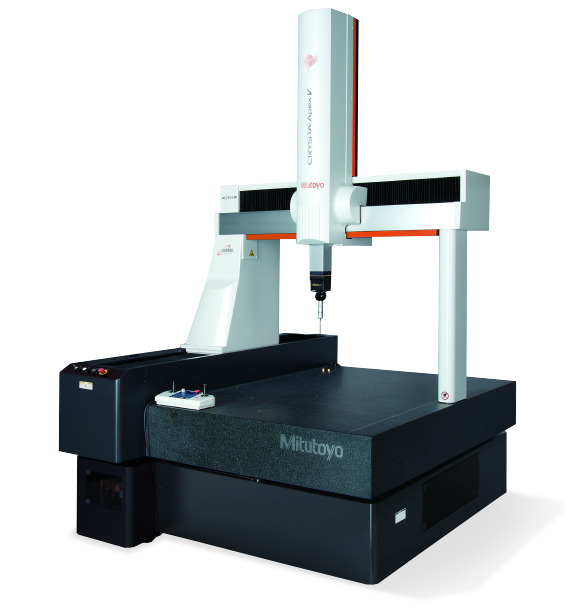
Source: Mitutoyo Website(https://www.mitutoyo.com/products/coordinate-measuring-machines/)
A CNC CMM that was first developed in 1976.
It features applications that respond to the demand for "Smart Factories" by allowing monitoring of operational status and maintenance management of the machine through the network.
Reasons for Selection