

Wireless CMM technology is changing how manufacturers handle dimensional inspection near the production floor. Instead of routing cables around a workpiece or moving every part to a dedicated measurement room, wireless systems make it easier to inspect parts where they are made, assembled, or installed. This is especially useful for large, heavy, or complex parts that are difficult to move, fixture, or access with a conventional wired setup.
For quality control teams and production engineers, the value of wireless measurement goes beyond convenience. It can reduce setup time, improve operator movement, and help bring reliable 3D measurement closer to production. A wireless CMM does not replace every bridge CMM, articulated arm, or laser tracker, but it can be a practical option when cable handling, part transport, and inspection downtime are becoming everyday bottlenecks.
A wireless CMM is a coordinate measuring machine that uses wireless communication for part of the measurement workflow. In many cases, the probe communicates with the controller, receiver, camera, or software without a physical signal cable attached to the operator’s hand. Removing that cable allows the operator to move more freely around the workpiece and reach areas that would be harder to access with a wired probe.
Traditional wired CMMs rely on cables for signal transmission, power, or controller communication. This works well in a fixed measurement room, but it can become inconvenient when measuring large parts, welded frames, tooling, or installed equipment. Cables can limit reach, catch on fixtures, drag across the workpiece, or force the operator to reposition the system more often than necessary.
Wireless CMMs may use infrared communication, Bluetooth-style communication, Wi-Fi, or manufacturer-specific wireless protocols. Some systems are semi-wireless, where only the probe communication is cable-free. Others offer broader wireless operation across the measuring device, probe, and controller. The key question is not just how the wireless connection works, but whether it removes real inspection bottlenecks in the user’s workflow.
One of the biggest advantages of a wireless CMM is faster setup. With fewer cables to connect, route, secure, and check, operators can start measurement sooner. This matters on the shop floor, where inspection often takes place between machining, welding, assembly, or rework. When the same check is repeated across multiple parts, even small setup-time savings can improve the overall workflow.
Wireless measurement also gives operators more freedom around the workpiece. With a wired probe or arm, cables can catch on fixtures, limit movement, or make it harder to reach the back side of a large component. A wireless probe allows operators to approach the part more naturally, which is especially useful for large workpieces, complex shapes, and features in tight or awkward locations.
Portability is another major benefit. Instead of moving the part to a CMM room, the measuring system can be brought closer to production. This helps reduce transport time, handling risk, and inspection downtime. For less experienced operators, cable-free operation can also make the system easier to learn because there are fewer connection steps and fewer cable-management issues.
Over time, reducing cable use can also help lower maintenance risks related to cable wear, connector damage, and accidental pulling.
Wireless CMMs are not all wireless in the same way. Some systems are designed to let operators move freely around the workpiece, while others mainly reduce cable handling inside a fixed measurement setup. Understanding this difference helps buyers choose a system that fits the actual inspection environment.
Handheld wireless CMMs offer the highest level of portability. Operators hold the probe and measure the workpiece directly, so the system can be brought to the part instead of forcing the part to fit the measuring system. The KEYENCE XM Series and WM Series fall into this category: the XM Series is designed for small to medium-size workpieces, while the WM Series supports large parts and wide-area inspection.
Wireless-capable articulated arms are also portable, but the arm must still be mounted and used within its physical reach. This makes arm-type systems useful for local inspection, but less flexible when the target is very large or when operators need to move around the entire workpiece.
Fixed CMMs with wireless or wireless-style probe technology can improve probe handling inside a controlled measurement room. However, the machine itself remains stationary, so this type is best for users who need high-accuracy lab inspection but want more flexibility around the probe head or probing system.
| Comparison Point | Handheld Wireless CMM | Wireless-Capable Arm CMM | Fixed CMM with Wireless Probe |
|---|---|---|---|
| Portability | Very high; the system can be brought directly to the workpiece. | High, but the arm must still be mounted and used within its reach. | Low; the machine remains in the measurement room. |
| Accuracy | High for shop-floor dimensional inspection. | Varies depending on arm length, setup, and environment. | Very high when used in a controlled environment. |
| Measurement Range | Small to large parts depending on the model. The KEYENCE XM Series supports up to 2 m, while the KEYENCE WM Series supports up to 25 m. | Best suited to local or medium-size inspection areas. | Limited to the CMM measuring volume. |
| Price Range | Contact manufacturer | Mid to high | High |
| Best-Fit User | Teams that need cable-free measurement near production. | Users who need portable inspection from a fixed local setup point. | Labs that prioritize precision but want more flexible probe handling. |
Wireless operation alone should not be the reason to choose a CMM. The first thing to check is communication stability. Manufacturing sites often include metal structures, motors, controllers, robots, and other equipment that can affect wireless communication. If the connection is unstable, measurement reliability may suffer. Before choosing a system, confirm how it handles signal loss, reconnection, and data protection during measurement.
Battery performance is another practical factor. A wireless probe needs to support the actual inspection cycle, not just a short demonstration. Check continuous operating time, charging time, spare battery cost, and whether battery replacement interrupts measurement. In multi-shift production, battery management can become part of the daily inspection workflow.
Software and accuracy should also be evaluated together. Some teams need measurement results to connect with existing quality systems, CAD comparison workflows, or inspection software. Others may prefer dedicated software that is easier for new operators to learn. Standards such as ISO 10360 are useful references, but buyers should also consider real operating conditions, including temperature, part size, fixturing, operator access, and measurement posture.
Finally, review training, calibration, service, and consumable availability. A low-cost wireless system can become expensive if support is limited, calibration is difficult, or operators need extensive training before they can trust the results.
Quality inspection is no longer limited to achieving higher accuracy in a dedicated lab. Many manufacturers also need reliable measurement closer to where production happens. Wireless CMMs help make this possible by reducing cable restrictions, simplifying setup, and allowing operators to work around the part instead of forcing the part to fit the measurement system.
This is especially valuable for manufacturers that need CMM-level dimensional inspection but cannot easily move every workpiece into a temperature-controlled room. It can also help teams that considered an articulated arm but found the setup, reach limits, or cable handling more complex than expected.
Handheld wireless CMMs are a strong fit for this middle ground. The KEYENCE XM Series is designed for small to medium-size workpieces and supports handheld probing for 3D and GD&T measurement. The KEYENCE WM Series extends the same shop-floor concept to larger workpieces, with a measurement range of up to 25 m, wireless probe operation, and support for both contact probing and laser scanning.
For teams that need faster inspection without moving large parts, wireless CMM technology can be a practical step toward more flexible quality control. It helps reduce downtime, improve operator movement, and bring dimensional measurement closer to where quality decisions are made.
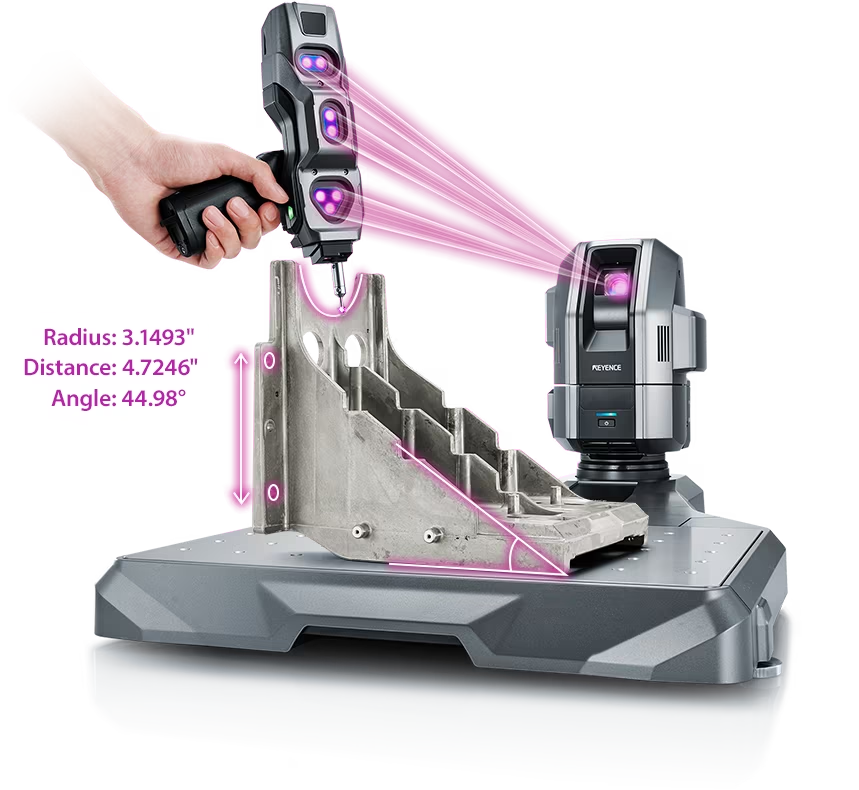
Source: KEYENCE Website(https://www.keyence.com/products/measure-sys/cmm/xm/index_pr.jsp)
This CMM has a caliper-like feel, enabling even beginners to perform high-precision measurements. It can be carried without the need for temperature control, allowing for immediate measurements at any desired location and time. As it doesn't require a large installation space, it's a CMM with a low entry barrier.
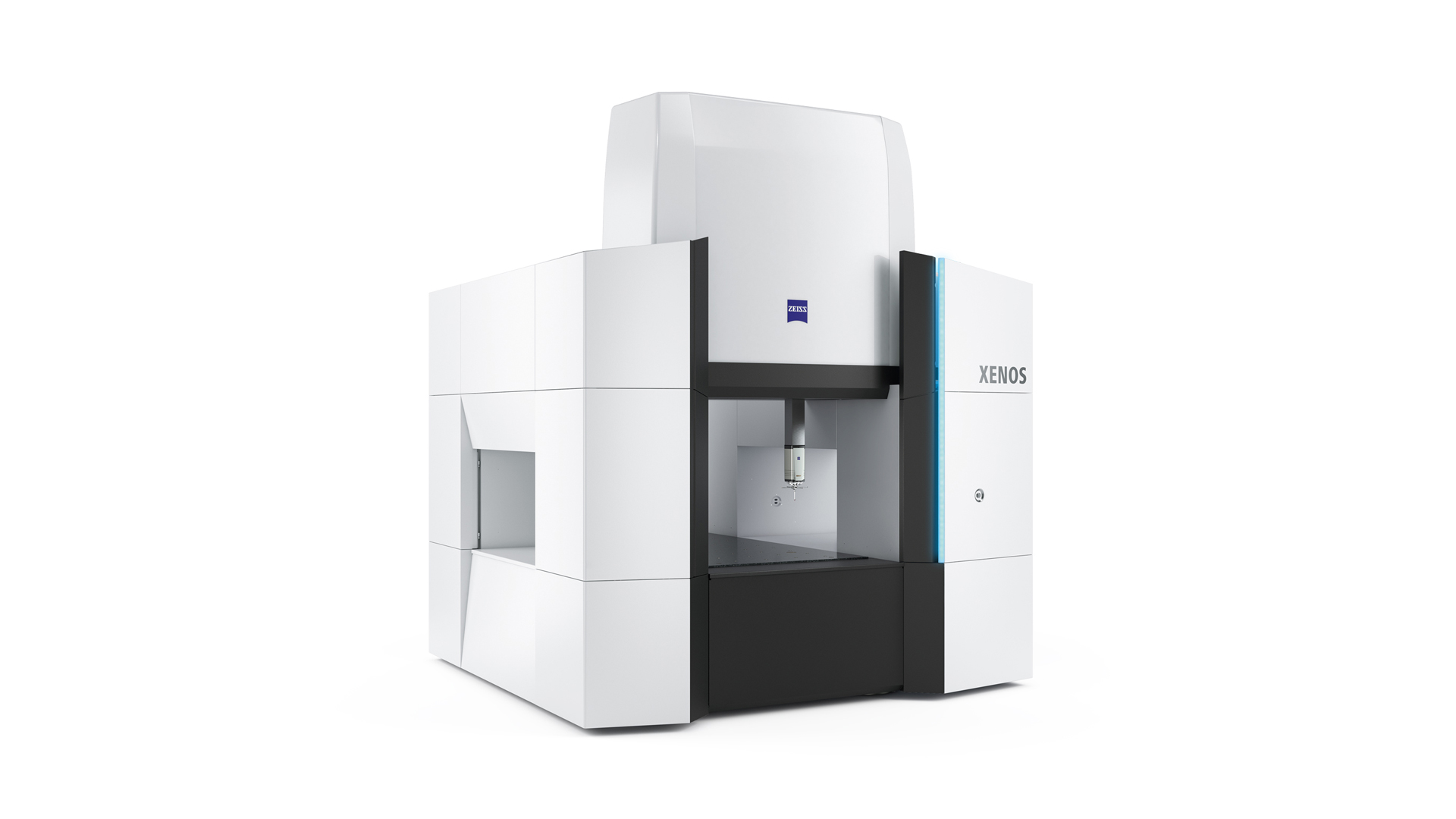
Source: Carl Zeiss Website(https://www.zeiss.com/metrology/products/systems/cmm.html)
Utilizing linear drive on all axes, this CMM boasts high precision with a maximum permissible length measurement error of 0.3+L/1000μm, repeatability of ±0.2μm, and resolution of 0.001μm. The reduced occurrence of errors allows for a decrease in the need for remeasurement.
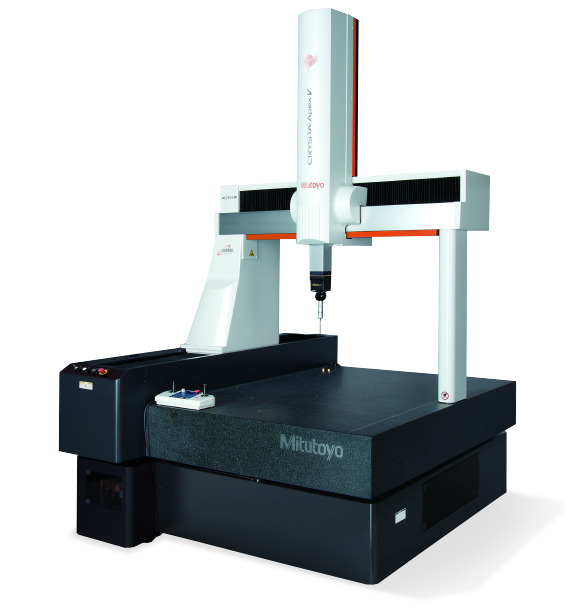
Source: Mitutoyo Website(https://www.mitutoyo.com/products/coordinate-measuring-machines/)
A CNC CMM that was first developed in 1976.
It features applications that respond to the demand for "Smart Factories" by allowing monitoring of operational status and maintenance management of the machine through the network.
Reasons for Selection